
Why Fall Is the Deadline for Asphalt Crack Sealing
Every fall, contractors repeat the same advice about asphalt crack sealing: get it done before winter. It's fair to wonder how much of that deadline is science and how much is sales. Your maintenance budget rides on the answer, so this blog lays out the reasoning. Sealant bonds only in the conditions fall provides. Winter is when an open crack does its structural damage. And contractor calendars fill weeks before the weather closes that sealing window.
To keep the reasoning concrete, the sections below follow a single hairline crack through the winter ahead. It's the kind most parking lots pick up every season. By the end, you'll be able to judge the deadline for yourself.
That Crack Will Cost More in April Than It Does in October
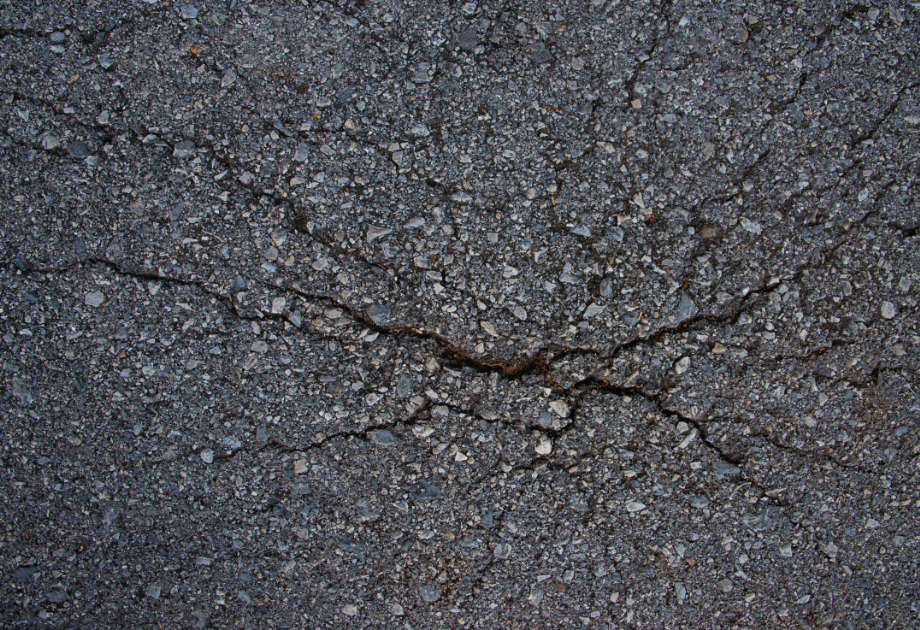
Rain gets into an open crack fast. Every storm between now and the first hard freeze sends a little more water inside, where it settles at the bottom. When the temperature drops, that water freezes. Ice takes up about 9 percent more space than the water it came from. So every freeze pushes outward and pries the pavement apart from the inside. The opening widens. The next rain carries in more water than the last one did.
The stone base under the pavement takes the bigger hit. When the ice melts, the water keeps moving down into it. Once that base gets wet, it softens under traffic and starts washing out. What's left is a hollow with nothing but the asphalt surface spanning it. Every car that crosses the spot presses that surface a little closer to failing, until one day it drops into a pothole. By spring, the fix is asphalt repair that reaches all the way down into the base.
One open crack carries known odds: 75 percent of unsealed cracks become potholes within three years, while sealed cracks fail at a rate of 1 percent. Sealing in October moves a crack from the first group into the second. All it takes is one routine maintenance visit.
Sealant Stops Working When the Temperature Drops
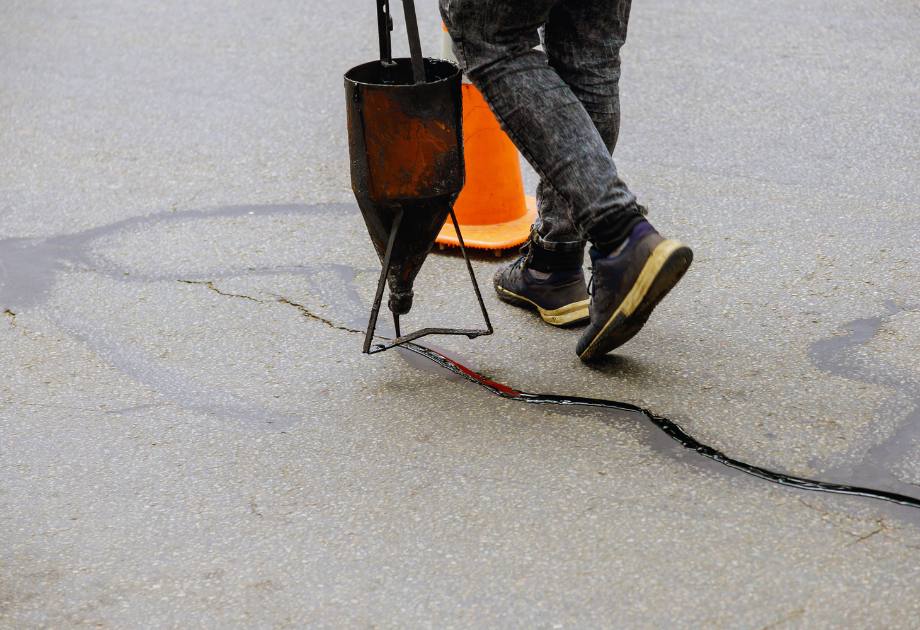
Crack sealant only works in a narrow set of conditions. Before the material goes down, the pavement itself has to be above 40 degrees Fahrenheit. Once it's colder than that, the sealant cools too fast to grip the crack walls. If you're wondering about driveway sealing at home in October, the same cutoff applies. Check the pavement temperature instead of the calendar.
But moisture is the stricter condition. However warm the afternoon gets, sealant will not stick inside a wet crack. That's why a sunny day after a rainy week still isn't sealing weather, and why crews watch the forecast as closely as the thermometer.
The width of the crack changes with the seasons too. Cracks widen through the cold months and tighten back up through the warm ones. In fall, the crack sits near the middle of that range, at a width the seal can flex with year-round. A seal applied at that mid-point has room to move. It can stretch through winter and compress through summer without breaking loose. That flexibility is how crack sealing extends pavement life. Fall is the only season that lines all three conditions up at once.

Book Before the Calendar Fills, Not Before the Freeze
Not every crack in your parking lot is a sealing job. The ideal candidate is a single crack up to about an inch wide, with firm pavement on both sides. When the conditions are right, sealant can bridge a gap like that and flex with it for years.
Alligator cracking is a different problem. If a section of pavement has broken into a web of connected cracks that looks like dried mud, the base underneath it has already failed. Sealant can't fix that, because the surface holding it keeps moving. Those sections go on the repair list instead.
Sorting cracks into those two lists is the first thing Pinnacle Paving & Sealing does on a fall walk-through. You only pay for sealant where sealant will hold.
Missed the Window? Here's What Late Sealing Takes
Yes, sealing can still happen in late fall or early winter. But it only works on a crack that is completely dry. And that's a condition nobody can put on a calendar.
Dry also costs extra once the season turns. Before any sealant goes down, crews have to run a heat lance over each crack. That tool blasts hot air to dry the opening and warm the walls until the sealant can grip. By late season, the cracks have also widened past the width a seal holds best. Between the extra prep and the extra material, the price runs 10 to 15 percent above the same work in October.
Even then, everything depends on the forecast. One wet week can push the job into next month. The crack did survive last winter. So did the ice that spent that winter widening it for this one. Late-season asphalt crack repair is the same job at a higher price, with worse odds of staying on schedule.
Get on the Fall Schedule with Pinnacle Paving & Sealing
One estimate request settles every deadline in this blog at once. The crack from your parking lot gets sealed and crossed off the list before the first hard freeze.
Pinnacle Paving & Sealing walks the parking lot with you and measures what's there. You get a straight answer about which cracks need sealing this fall and which ones can hold. If something can wait, you'll hear that too. Our crews serve Cincinnati, Columbus, Indianapolis, and Louisville. Request an Estimate while the fall schedule still has room. We're on it.
